
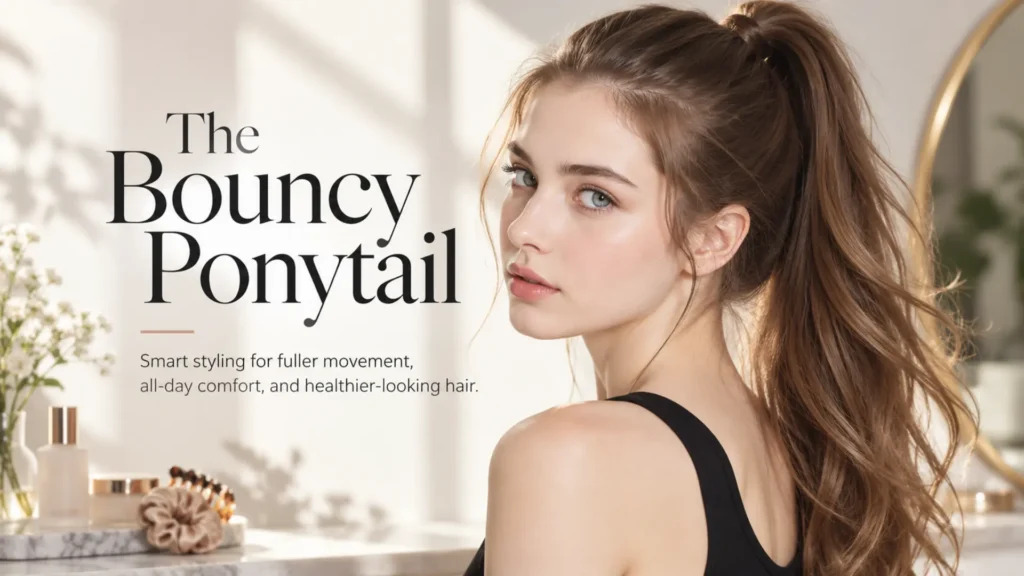
The Bouncy Ponytail: A Practical Guide to Healthy, Comfortable Ponytail Styling
A ponytail is one of the simplest ways to manage long or medium-length hair, but creating one that looks full, moves naturally, and remains comfortable involves more than pulling the hair back and securing it with an elastic. The appearance of a ponytail is influenced by hair density, individual strand thickness, texture, length, moisture level, haircut, placement, and the amount of tension used at the base. These factors determine whether a ponytail looks light and flexible or flat, heavy, and tightly compressed.
Hair health matters just as much as styling technique. Human hair is composed primarily of keratin, a structural protein that forms the hair fiber. Once hair grows beyond the scalp, the visible strand is not living tissue and cannot biologically repair itself. Mechanical friction, repeated tension, chemical processing, and excessive heat can gradually damage the outer cuticle and weaken the fiber. For that reason, a good ponytail routine should focus not only on appearance but also on reducing unnecessary stress on both the hair and scalp.
Contents
What Makes a Ponytail Look Bouncy?
The movement of a ponytail is largely a matter of structure and mechanics. Hair with enough flexibility can move independently when the head moves, while excessively stiff, tangled, or heavily coated strands tend to move together as a single mass. Hair density also plays an important role. Density describes how many hair fibers grow within an area of the scalp, while strand thickness refers to the diameter of each individual hair. A person can therefore have many fine hairs, fewer coarse hairs, or numerous combinations in between.
Length affects movement as well. Longer hair has more mass and can create a pronounced swinging motion, but its additional weight can also pull the ponytail downward. Shorter ponytails may feel lighter and appear more lifted. Layers can reduce concentrated weight at the ends and create additional movement, although the final effect depends on the haircut and natural texture.
The position of the ponytail changes its appearance too. A higher ponytail usually projects farther away from the neck and can produce more visible movement. A low ponytail tends to fall closer to the back and shoulders. Neither position is inherently better; comfort, hair length, scalp sensitivity, and the amount of tension needed to hold the style should determine which placement works best.
How Ponytails Can Affect Hair and Scalp Health
A ponytail itself is not harmful when worn comfortably, but repeatedly pulling hair very tightly can place excessive mechanical stress on the follicles and hairline. Dermatology recognizes a condition known as traction alopecia, a form of hair loss associated with persistent pulling forces on the hair. Tight ponytails, braids, extensions, buns, and similar styles can contribute when substantial tension is repeatedly applied to the same areas.
Early signs of excessive tension may include scalp tenderness, headaches related to the hairstyle, broken hairs around the temples or hairline, redness, or small bumps near stressed follicles. Changing the position of a ponytail and reducing tension can help limit repeated pressure on the same area. Persistent hair loss, scalp inflammation, pain, or significant thinning should be evaluated by a qualified healthcare professional rather than treated as a styling problem alone.
The hair fiber can also be damaged mechanically. Repeatedly tightening a narrow elastic in exactly the same location creates friction and compression on the shaft. Over time, weaker strands may split or break near that point. This is why a hairstyle can sometimes create the appearance of shorter hairs even when the follicle itself remains healthy.
Wet hair deserves additional care. Water causes the hair fiber to swell and temporarily changes its mechanical properties. Hair can stretch more when wet, making aggressive brushing, twisting, or tightly securing damp hair more likely to produce unnecessary strain. Allowing the hair to dry partially and handling it gently can reduce this type of mechanical stress.
How to Build a Better Ponytail
A reliable ponytail begins before the hair is tied. Instead of using maximum tension to force every strand into position, the goal should be to create enough control for the style to remain secure while allowing the scalp and hairline to stay comfortable. Proper detangling, suitable placement, moderate tension, and occasional changes in hairstyle can make a noticeable difference over time.
The condition of the hair should also guide styling choices. Healthy-looking hair tends to reflect light more evenly because its outer surface is smoother. Hair that has experienced significant heat, bleaching, chemical processing, or mechanical damage may feel rougher and tangle more easily. Rough fibers experience more friction against neighboring strands, which can reduce natural movement and make a ponytail appear less fluid.
Start With the Condition of Your Hair
Before making a ponytail, gently remove tangles rather than pulling them through the hair with force. Starting near the ends and gradually working upward can reduce the amount of tension transferred to the scalp. This is particularly useful for long, curly, wavy, chemically treated, or easily tangled hair.
Moisture balance is also important. Hair that is extremely dry can become less flexible and more prone to surface damage, while excessive buildup can make strands feel heavy. Cleansing frequency does not need to be identical for everyone because scalp oil production, activity level, hair texture, climate, and styling habits vary considerably from person to person.
Heat should be handled carefully as well. Hair dryers, straighteners, and curling tools can temporarily change the shape of hair fibers, but repeated exposure to excessive temperatures can damage the cuticle and weaken the internal structure of the strand. When heat styling is used, moderate temperatures and shorter exposure are generally preferable to repeatedly applying very high heat.
Hair growth itself is relatively slow. Scalp hair typically grows around a centimeter per month on average, although the rate varies among individuals and over time. Because damaged length cannot rapidly be replaced, preventing unnecessary breakage is often more practical than trying to correct extensive damage after it has occurred.
Choose Ponytail Placement With Comfort in Mind
Ponytail height changes both appearance and force distribution. A high ponytail may require more tension to keep the hair elevated, especially when the hair is long or dense. A mid-height ponytail can provide a balance between movement and support, while a low ponytail usually requires less upward pull from the hairline.
Comfort should be the main indicator. A ponytail does not need to feel tight in order to look neat. If the scalp begins to ache soon after the style is created, the base can usually be loosened slightly without losing the overall shape.
Changing placement is another useful habit for people who wear ponytails frequently. Wearing an elastic at exactly the same height every day repeatedly stresses similar sections of the hair shaft. Alternating between high, medium, low, loose, and down hairstyles changes where friction and tension occur.
Natural texture should not be treated as something that has to be completely removed before making a ponytail. Straight, wavy, curly, and coily hair can all form ponytails, but their handling requirements differ. Trying to force every texture into the same smooth, highly tensioned finish can create unnecessary manipulation.
Secure the Hair Without Excessive Tension
The purpose of a hair tie is to keep the gathered hair together, not to compress it as tightly as possible. A wider or softer tie generally distributes pressure across a larger area than a very thin elastic. Regardless of the type used, it should be secure enough to hold the style without creating persistent pulling at the scalp.
It is also useful to pay attention to the way a hair tie is removed. Pulling an elastic directly through tangled hair can catch individual strands and break them. Unwrapping the tie carefully takes only a few additional seconds and reduces friction.
For people who exercise, work outdoors, or need stronger hold, a more secure ponytail may be necessary temporarily. The important distinction is between short-term functional tension and wearing a highly stressed style for long periods every day. Once a tight style is no longer necessary, loosening or changing it reduces continuous pressure on the hairline.
Small adjustments often produce a better result than increasing tension. Smoothing the hair with the hands, repositioning the base, allowing some natural volume near the scalp, or carefully adjusting individual sections can create a cleaner shape without requiring the entire ponytail to be tightened.
A Simple Approach to Long-Term Ponytail Care
A healthy ponytail routine is based on consistency rather than complicated styling rules. Keep the scalp clean according to your individual needs, detangle hair carefully, limit unnecessary mechanical friction, manage heat exposure, and avoid repeatedly pulling the same areas of the hairline under strong tension. Regular trims can remove severely split or weathered ends, although trimming does not change the biological growth rate at the scalp.
Pay attention to changes in the hair rather than judging it only by the finished hairstyle. Increased breakage around the elastic area, persistent scalp discomfort, thinning around the temples, or a noticeable increase in tangling can be signs that the routine needs adjustment. Hair naturally changes with age, hormones, environmental conditions, health, grooming habits, and chemical treatments, so a technique that worked well at one stage of life may need to be modified later.
The best ponytail is ultimately one that combines appearance with comfort. Natural movement comes from the characteristics of the hair itself as well as thoughtful styling. By working with the hair’s density, texture, length, and condition instead of relying on excessive tension, it is possible to create a ponytail that feels lighter, moves more freely, and supports healthier everyday hair habits.
What makes a ponytail look bouncy?
A bouncy ponytail depends on factors such as hair length, thickness, texture, and placement. Hair that is flexible, properly detangled, and not weighed down by excessive products tends to move more naturally.
How can I make my ponytail look fuller and more voluminous?
To create a fuller ponytail, gently detangle your hair, choose a suitable ponytail height, and avoid pulling the hair too tightly. Adding natural volume near the roots and using a comfortable hair tie can also help create a lifted appearance.
Can wearing a ponytail every day damage your hair?
Wearing a ponytail every day is generally safe when it is not too tight. However, consistently pulling hair tightly can cause breakage, scalp discomfort, and traction alopecia. Changing ponytail positions and using softer hair ties can help reduce these risks.